Ethereum (ETH) currently finds itself at a pivotal juncture, with its price oscillating around the crucial $2,100 mark as market participants weigh conflicting technical signals and impending fundamental catalysts. Over the past 24 hours, ETH has shown a modest gain of +1.41%, yet remains nearly 4.52% off its 7-day high of $2,192.22, suggesting underlying caution despite minor upward movements. Traders are keenly observing a confluence of on-chain data, technical indicators, and upcoming network developments to discern what could move Ethereum next in the near to medium term.
Ethereum's Technical Crossroads: Support, Resistance, and Indicator Readings

The immediate price action for Ethereum places the $2,100 zone as a critical battleground for bulls and bears. Maintaining this level is paramount for any bullish continuation. Should ETH fail to hold $2,100, analysts warn of potential downside targets towards $2,000, and further significant support levels at $1,947 and the year-to-date low of $1,734. Conversely, reclaiming resistance levels above $2,140–$2,200 is essential for a convincing recovery. A sustained push past $2,150–$2,170 could open the path towards $2,300 and potentially higher, eyeing the $2,570+ region.
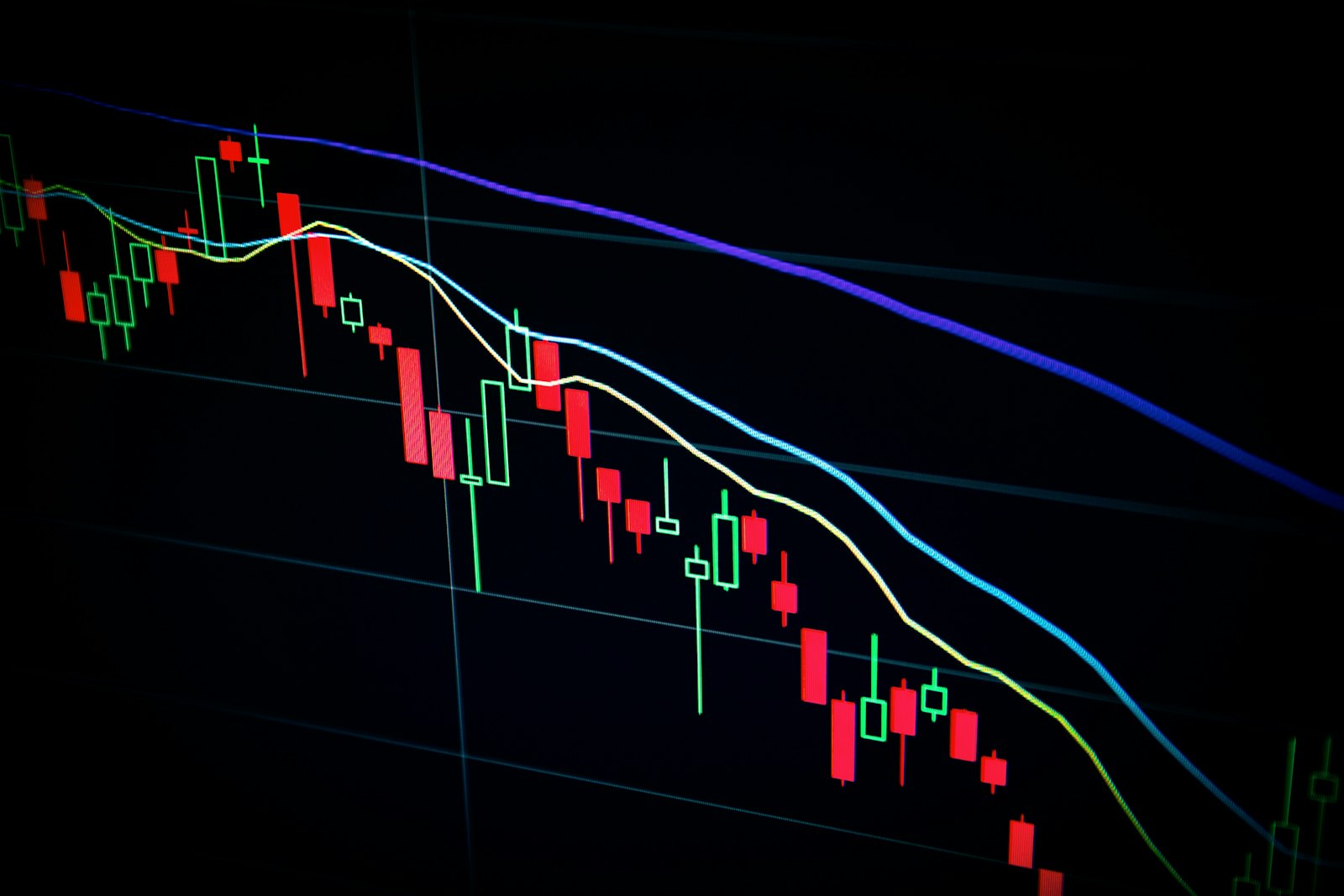
Looking at broader technical indicators, the 50-day Exponential Moving Average (EMA) has largely acted as a ceiling, indicating that bears maintain control over the short-term trend. Price action below the EMA50 limits the prospects for a sustainable recovery. The Relative Strength Index (RSI) is reportedly trending downwards, nearing the oversold territory around 30. While this typically signals a potential for a bounce, the overall path of least resistance still appears bearish, though some positive signals from relative strength indicators are noted to be curbing deeper declines.
Chart patterns also paint a mixed picture. Some analysts have identified an inverted cup-and-handle formation, a pattern often preceding further bearish continuation, with its lower boundary at $1,947. Others, however, suggest the current sideways movement could represent a Wyckoff reaccumulation structure on higher timeframes, implying a phase of base-building before a larger upward expansion. Traders interpret these setups as educational insights into potential market structures, rather than definitive predictions.
On-Chain Dynamics and Upcoming Catalysts for Ethereum
Recent on-chain data reveals significant activity that could influence Ethereum's trajectory. Notably, the Decentralized Finance (DeFi) ecosystem on Ethereum witnessed a substantial inflow of over +$1 billion in Total Value Locked (TVL) within the last 24 hours (as of May 24, 2026). This surge was primarily driven by major protocols like Lido, Binance staked ETH, and Aave v3. This inflow is particularly noteworthy given that Ethereum's long-term TVL dominance has been under pressure, highlighting renewed capital interest in the network's core DeFi applications. Furthermore, record levels of ETH staking observed in early 2026 continue to reduce the circulating supply, potentially creating tighter market liquidity.
Whale activity presents a more nuanced view. Earlier in May, large investors accumulated over 140,000 ETH, valued at approximately $322 million. However, more recent reports suggest "smart money selling" and a substantial 225,000 ETH inflow to Binance, which could increase immediate selling pressure on exchanges. Spot Ethereum ETFs have also faced headwinds, experiencing $65.65 million in outflows on May 15 and a total of $249 million in weekly outflows, marking their worst performance since January. This stands in contrast to positive inflows seen in April 2026.
Looking ahead, the highly anticipated Glamsterdam upgrade, tentatively scheduled for June 2026 (though potential delays into Q3 are noted), is a significant fundamental catalyst. This upgrade is projected to dramatically reduce gas fees by 78.6% and boost transaction throughput to an impressive 10,000 transactions per second. Such an improvement is widely regarded as the most critical development for potentially propelling Ethereum back towards the $4,000 valuation. Broader macroeconomic factors, such as ongoing US-Iran peace talks, could provide a positive backdrop, while hotter-than-expected US Producer Price Index (PPI) data and rising Treasury yields remain potential headwinds, reinforcing fears of a prolonged high-rate environment. Upcoming FOMC minutes and Nvidia earnings this week are also poised to influence overall crypto market sentiment.
Bullish vs. Bearish Scenarios for Ethereum Price Action Next
For Ethereum, two distinct scenarios emerge from the current market dynamics. In a bullish outlook, a successful and timely rollout of the Glamsterdam upgrade in June, leading to significant reductions in gas fees and increased network efficiency, could be the primary driver. This, combined with an acceleration of institutional ETF inflows and a broader market rally for Bitcoin (potentially breaking above $90,000), could see ETH clearing the $4,000 mark in Q3 and potentially ending the year between $5,000 and $7,500. For this scenario, holding the critical $2,100 support and breaking above $2,150–$2,170 towards $2,570+ would be key. Automated signal tools such as BlastSignals flag setups like this with a confidence score, helping traders identify potential shifts.
Conversely, a bearish scenario could materialize if the Glamsterdam upgrade faces delays or technical issues. A renewed downturn in Bitcoin (below $70,000) stemming from inflation concerns or hawkish Federal Reserve policy, coupled with continued Ethereum ETF outflows, would likely exert significant downward pressure on ETH. In this case, a decisive break below the $2,085 support could lead to a retest of the February 2026 lows near $1,743, or even a deeper decline towards $1,350 if key technical levels are lost.
FAQ
What is the Glamsterdam upgrade?
The Glamsterdam upgrade is a significant upcoming Ethereum network improvement, targeted for June 2026, designed to reduce gas fees by an estimated 78.6% and increase transaction throughput to 10,000 transactions per second.
Why is the $2,100 level important for ETH?
The $2,100 level is considered a critical support zone for Ethereum. A sustained hold above this price point is crucial for bullish momentum, while a definitive break below it could signal further downward price movement towards lower support levels.
Are Ethereum ETFs experiencing inflows or outflows?
Recently, spot Ethereum ETFs have seen net outflows. They recorded $65.65 million in outflows on May 15 and $249 million in weekly outflows, making it their worst week since January, despite earlier positive inflows in April 2026.
This content is for informational purposes only and not financial advice.